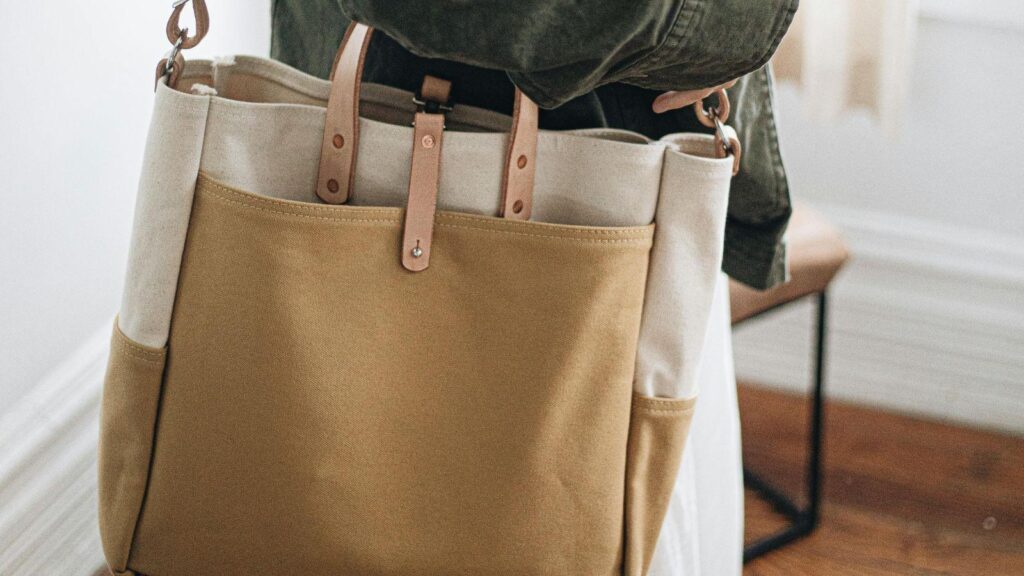
Tote bags are widely used for retail merchandise, event giveaways, brand collaborations, and small-batch product launches. Because they function as both a utility item and a branding surface, the design must hold up at arm’s length and in motion.
Designing for fabric introduces constraints that do not apply to digital graphics. Printable areas, seam allowances, ink absorption, and material texture all influence the final result. Minor layout decisions can affect whether a tote appears balanced or slightly off-center.
A tote bag mock up generator helps bridge that gap. These tools combine product-sized templates, layout controls, and preview simulations so artwork can be evaluated before printing.
Adobe Express provides a straightforward entry point, offering tote-specific templates and export settings that simplify the transition from digital layout to physical product.
Table of Contents
ToggleStep-by-step how-to guide for using Tote Bag Mock Up Generator
Step 1: Start with the correct tote dimensions and template
Goal
Align the canvas to the exact printable area before building the design.
How to do it
- Confirm tote dimensions (standard, oversized, gusseted, or vertical).
- Review printable area limits provided by the manufacturer.
- Begin with a tote-specific template rather than a blank layout.
- Replace placeholder elements to test spacing early.
- Keep important text and graphics within safe margins.
What to watch for
- Seams may slightly crop artwork near the edges.
- Large graphics can distort visually if not centered.
- Small text may lose clarity on textured canvas.
Tool notes
- You can create a tote bag design with Adobe Express using templates sized for common tote formats, helping reduce margin and scaling errors.
- If sharing specs with collaborators, Google Drive can centralize template files and dimension references.
Step 2: Define hierarchy and focal point
Goal
Create a clear, structured layout that reads well from a distance.
How to do it
- Choose one dominant element (logo, illustration, short phrase).
- Remove non-essential decorative details.
- Decide whether the layout will be centered, minimal, or edge-aligned.
- Duplicate the layout to compare alternate spacing.
- View the design at reduced zoom to simulate real-world viewing distance.
What to watch for
- Overcrowded layouts reduce legibility.
- Long taglines may feel compressed.
- Decorative scripts may not reproduce cleanly on fabric.
Tool notes
- Adobe Express makes it easy to duplicate layouts and adjust spacing quickly.
- For structured version tracking, ClickUp can log design revisions and approval checkpoints.
Step 3: Adjust typography and contrast for fabric printing
Goal
Ensure text and graphics remain sharp once printed on canvas or cotton.
How to do it
- Increase font size slightly beyond on-screen expectations.
- Use medium or bold weights for key messaging.
- Increase letter spacing for decorative fonts.
- Strengthen contrast between foreground and background.
- Avoid ultra-thin lines.
What to watch for
- Fabric texture softens fine details.
- Light-on-light combinations reduce readability.
- Subtle gradients may appear uneven.
Tool notes
- Adobe Express font controls allow quick testing of weight and contrast.
- For basic readability checks, WebAIM Contrast Checker can help assess color contrast ratios.
Step 4: Optimize images for high-resolution output
Goal
Maintain image clarity and color stability during printing.
How to do it
- Use images at 300 DPI at final print size.
- Avoid enlarging low-resolution graphics.
- Adjust brightness slightly for darker fabrics.
- Simplify complex blends or layered effects.
- Flatten layers if required by the print vendor.
What to watch for
- Screenshots often lack sufficient resolution.
- Dark artwork may appear muted on natural canvas.
- Highly detailed textures may not reproduce consistently.
Tool notes
- Adobe Express supports high-resolution exports suitable for tote printing.
- For storing approved production files securely, Box can manage version history and permissions.
Step 5: Use mockups to evaluate real-world appearance
Goal
Preview how the tote will look in realistic settings before final export.
How to do it
- Generate a mockup preview using a tote bag generator.
- Evaluate scale relative to a human model or everyday setting.
- Check whether borders or margins appear balanced.
- Compare alternate layout versions side by side.
- Review alignment at 100% zoom.
What to watch for
- Designs may appear smaller in real-world context.
- Border thickness may feel heavier once printed.
- Center alignment can shift visually depending on bag shape.
Tool notes
- Adobe Express provides preview functionality that helps simulate tote placement.
- For planning product visuals within a broader campaign, Buffer can organize preview images for scheduled publishing.
Step 6: Export the final print-ready file
Goal
Produce a file that matches manufacturer requirements exactly.
How to do it
- Confirm the required export format (commonly PDF or PNG).
- Match export dimensions precisely to the template.
- Disable unnecessary compression.
- Double-check bleed and margin settings.
- Save the file with a clear naming convention.
What to watch for
- Automatic resizing can distort proportions.
- Low-quality export settings reduce sharpness.
- Missing bleed margins may create unintended white edges.
Tool notes
- Adobe Express export settings support high-resolution formats appropriate for tote production.
- Reviewing the final file in Adobe Acrobat Reader helps confirm layout and scale.
Step 7: Coordinate production and shipping logistics
Goal
Ensure smooth fulfillment and distribution after design completion.
How to do it
- Confirm order quantities and turnaround times.
- Request a sample if producing a larger run.
- Verify shipping addresses.
- Store confirmations with final artwork files.
- Track delivery deadlines against launch dates.
What to watch for
- Seasonal production surges may extend timelines.
- Slight color variation between proof and final print.
- Packaging differences for bulk shipments.
Tool notes
- Adobe Express files can be reused for future colorways or updated designs.
- For physical distribution and tracking, FedEx provides shipping services suitable for retail and influencer merchandise shipments.
Common workflow variations
- Minimal logo tote: Focus on a centered mark with strong contrast. Avoid small text and maintain generous margins.
- Statement phrase tote: Use bold typography and test readability at a distance. Simplify decorative elements.
- Pattern-based tote: Extend pattern edges slightly beyond trim boundaries and confirm symmetry.
- Limited-run campaign tote: Maintain consistent placement across variations and store final files in a centralized workflow system.
Before you start checklist
- Tote dimensions confirmed
- Printable area reviewed
- High-resolution images prepared
- Brand message finalized
- Fabric color selected
- Production timeline established
- Shipping address verified
- Usage rights confirmed
Pre-export / pre-order checklist
- Text and logos inside safe margins
- Resolution verified at 300 DPI
- No pixelation at full zoom
- Bleed extended where required
- Export format matches manufacturer requirements
- File clearly labeled
- Final file reviewed in PDF viewer
- Quantity confirmed
Common issues and fixes
- Blurry printed design.
Replace low-resolution files and export again at full resolution. - Text too close to seams.
Adjust layout inward and reconfirm safe margins. - Colors appear dull on canvas.
Increase contrast slightly and avoid subtle tonal differences. - Design looks off-center.
Reconfirm alignment using template guides before submission. - Unexpected white borders.
Extend background elements into bleed areas where necessary. - Incorrect version submitted.
Maintain consistent file naming and store only approved versions in the production folder.
How To Use Tote Bag Mock Up Generator: FAQs
Is a template-based workflow safer than starting from scratch?
Templates reduce sizing and margin errors. Starting from scratch allows flexibility but increases alignment risk.
What file format is typically required for tote printing?
High-resolution PDF or PNG files are commonly accepted. Requirements vary by manufacturer.
How detailed should tote artwork be?
Fabric printing softens fine details. Bold shapes and strong contrast reproduce more consistently.
When is a physical sample recommended?
For larger production runs or retail distribution, a sample can confirm color and placement accuracy. Smaller runs may rely on digital review.
Should seam allowances always be considered?
Yes. Artwork placed too close to stitching lines can distort once sewn. Keeping key elements inside safe margins reduces that risk.